Free shipping on every order


Our Mycorrhizal Fungi for Trees is a liquid inoculant of beneficial mycorrhizal fungi that partners with plant roots. It helps roots reach more water and nutrients and supports a living soil around them.
Add at planting for faster establishment and tougher, healthier trees.
Free shipping1–3 day delivery1m+ happy customers
1m+ happy customersMade in the USAMade by growers
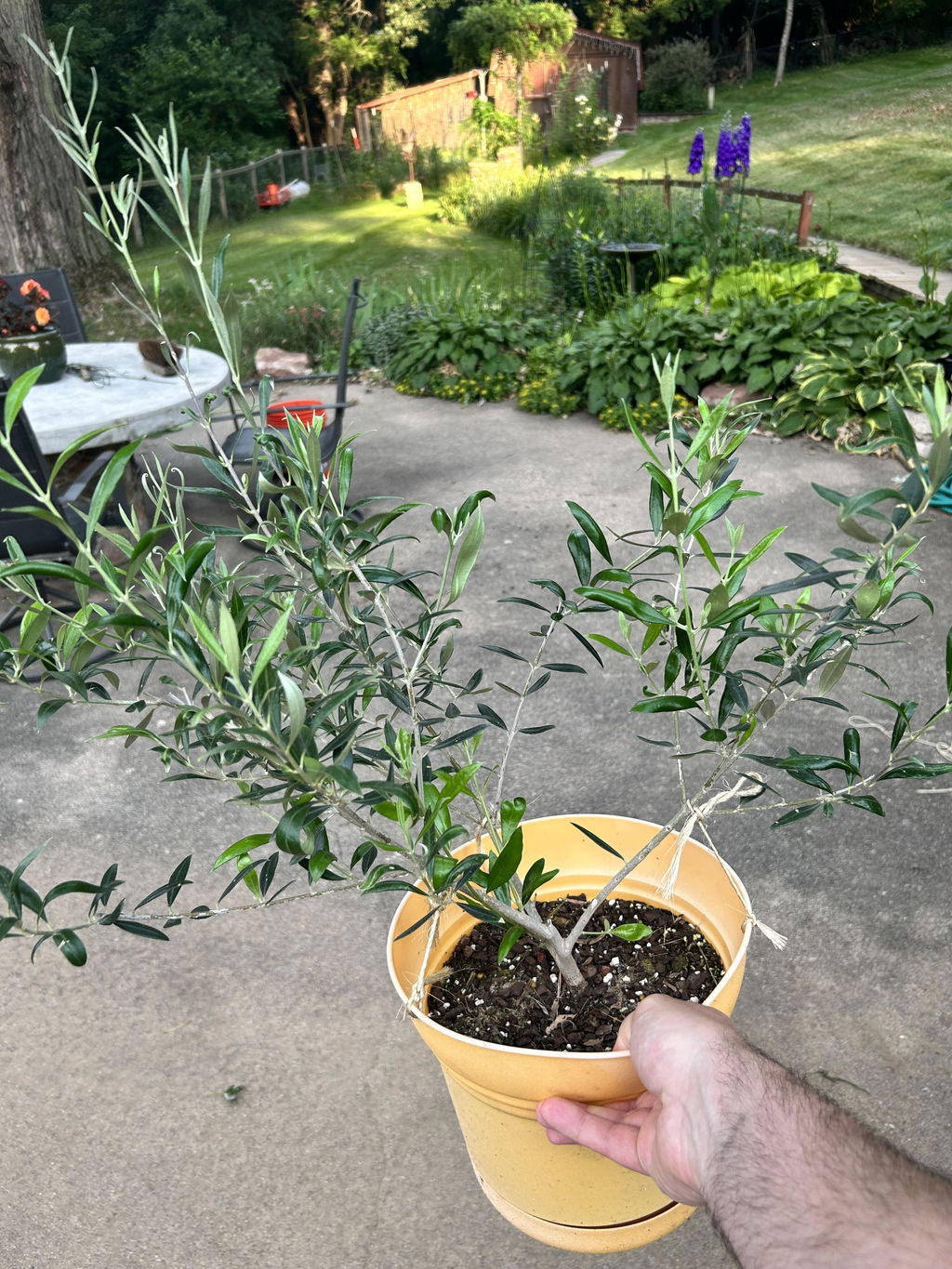
“Very useful when replanting. Huge fan!”
Verified buyer ·
Soil and root health are shaped by watering, drainage, light and season as much as by what you add, so this is one part of overall plant care.

3.6% nitrogen, all of it nitrate — the nutrient behind leaf growth and green colour.

5.1% soluble potash, the largest number in the analysis — the nutrient behind sturdy new stems.

3% available phosphate — the nutrient behind root development.
Transplanting
Sprinkle on the roots and in the hole when transplanting
Once, at planting
New soil prep
Mix in 4 Tbs per cubic foot of soil
Once, when preparing soil
Established trees & shrubs — small (spring & summer)
1/2 to 1 tsp, spread evenly around the trunk and gently mixed into the top of the soil, then watered
Apply every 2-4 weeks
Established trees & shrubs — medium (spring & summer)
1 to 2 tsp, same application
Apply every 2-4 weeks
Established trees & shrubs — large (spring & summer)
1 to 1.5 Tbs, same application
Apply every 2-4 weeks
Established trees & shrubs (fall & winter)
Same amounts
Apply every 4-8 weeks
Compost tea
1/4 - 1/2 tsp per gallon of compost tea
Add when brewing
Mycorrhizal Fungi for Trees is a dry inoculant, so the goal is contact between the granules and the roots or soil. At planting, sprinkle it directly on the root ball and into the hole; that direct root contact is the highest-value application. For new soil, mix 4 tablespoons per cubic foot. For established trees, spread ½ teaspoon to 1½ tablespoons by tree size around the trunk out toward the drip line, work it into the topsoil and water it in, every 2–4 weeks in spring and summer and every 4–8 weeks in fall and winter.
Almost certainly, because Mycorrhizal Fungi for Trees carries both fungal types. Oaks, pines, spruces, firs, birches and beeches partner with ectomycorrhizae, which sheath the outside of the roots; maples, fruit trees, dogwoods, magnolias, crepe myrtles and most other landscape trees partner with endomycorrhizae, which colonize from within. Both groups are in the blend at measured counts, so the right partner is present whichever family your tree belongs to. Shrubs, balled-and-burlapped stock and bare-root plantings use it the same way.
They colonize the roots and grow outward as a network of fine threads that works as an extension of the root system, reaching water, phosphorus and micronutrients well beyond the roots themselves. In forests, most trees run on this partnership for free. Landscape trees planted into disturbed or builder-grade soil often lack the fungi entirely. Mycorrhizal Fungi for Trees restores the partnership, backed by soil bacteria that improve nutrient cycling and Trichoderma that help beneficial organisms dominate the root zone, which is why inoculated transplants establish faster.
Yes. Mycorrhizal Fungi for Trees contains no NPK; it’s living biology measured in colony-forming units. The fungi and bacteria improve how completely roots capture water and nutrients, but they don’t supply the nutrition itself. The pairing works in both directions: fertilizer without biology leaches past sparse roots, and biology without nutrients has less to deliver. Run it alongside a tree fertilizer, especially for young trees putting on structural growth, and the fed nutrients reach a wider root network.
It can be part of the answer, not the whole one. Decline in a mature tree usually has a primary cause: compacted soil, grade changes, trunk damage, drought stress or disease, and that’s worth diagnosing first, ideally with an arborist’s look. Where Mycorrhizal Fungi for Trees helps is rebuilding root-zone biology in compacted or disturbed soil, so the feeder roots can reach more water and nutrients. Apply it out toward the drip line where those roots live, work it into the topsoil and water it in.
Trees run on the longest clock in the yard. Colonization takes several weeks after the granules meet the roots, and visible evidence follows by the season rather than the week. Transplants planted with Mycorrhizal Fungi for Trees show it first: less dieback, earlier bud break and steadier first-season growth. On established trees, expect the difference across a full growing season, in better leaf color and density, improved drought tolerance and a stronger response to feeding as the extended root network puts nutrients to use.
Let's Start Growing!
Choose your sizeTell us what you're growing and we'll match the right formula.
Start typing your plant above.